Light Up Your Home Right: How to Choose the Right Bulbs
20 February 2026 • RentNowBrunei
Most people grab whatever bulb looks familiar off the shelf and call it a day. But lighting has a bigger impact on how your home feels than most people realise. The wrong bulb in the wrong room can make a cosy bedroom feel like a hospital ward, or leave your kitchen too dim to work in comfortably. Getting it right doesn't require an interior design degree. You just need to know a few basics.
A warmly lit living room in the evening with soft yellow lighting from a floor lamp and ceiling light
Brightness is Measured in Lumens, Not Watts
This is the most common point of confusion. For years, people picked bulbs based on watts, and it made sense because back then all bulbs used roughly the same technology. Now that LED bulbs are everywhere, wattage just tells you how much electricity a bulb uses, not how bright it actually is. For brightness, you want to look at lumens.
As a general guide, here is what to aim for depending on the space you are lighting.
400 to 500 lumens for bedside and reading lamps
800 lumens for a standard bedroom ceiling light
1,000 to 1,500 lumens for a living room
2,000 lumens or more for large open spaces
When shopping for bulbs, ignore the wattage comparison on the box and go straight to the lumens figure. That number tells you exactly how much light you are actually getting.
Colour Temperature: Getting the Warmth Right
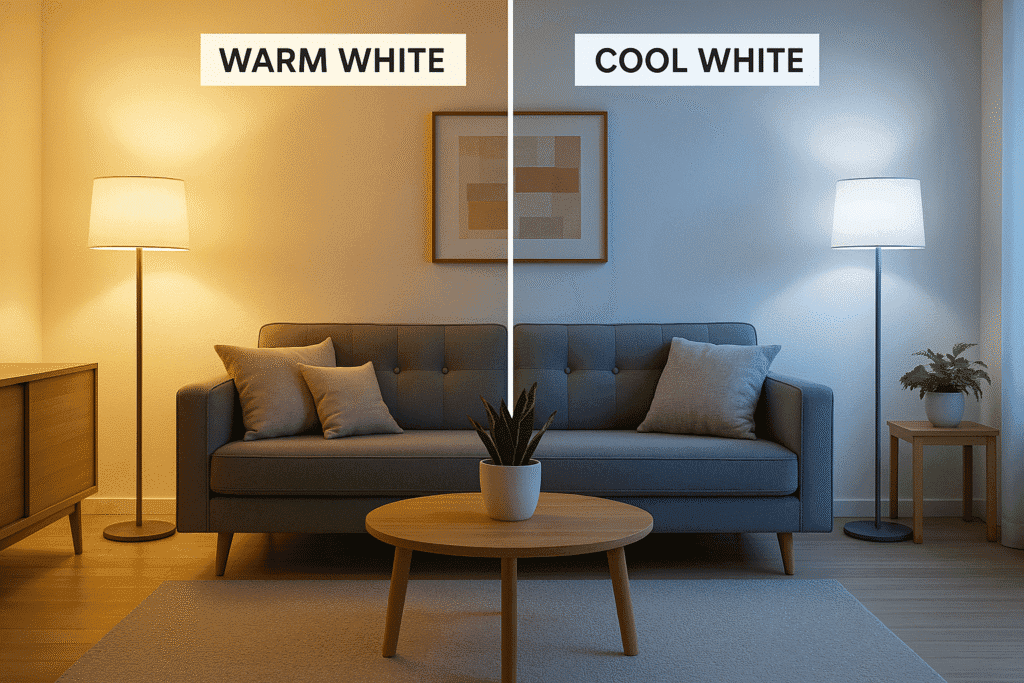
Colour temperature is measured in Kelvin and determines whether your light looks warm and cosy or cool and crisp. For most living spaces, you want something in the 2700K to 3000K range. This produces a soft, slightly yellow tone that feels welcoming and relaxed. It's the kind of light that makes a room feel like a home rather than an office.
That said, warmer light is not right for every room. For spaces where you need to see clearly and stay alert, a cooler white light works better. Think about your kitchen, laundry area, or study desk. In these spots, something in the 4000K to 5000K range gives you a cleaner, brighter light that makes tasks easier to do without straining your eyes.
A side by side comparison of a room lit with warm yellow light versus cool white light
2700K to 3000K for bedrooms, living rooms, and dining areas
3500K to 4000K for bathrooms and hallways
4000K to 5000K for kitchens, laundry rooms, and study desks
Always Go for LED
If you are still using older bulb types, now is a good time to switch everything over to LED. They use significantly less electricity, last much longer, and produce very little heat compared to traditional bulbs. Over time, the savings on your electricity bill more than cover the slightly higher upfront cost.
When it comes to brands, it is worth spending a little more on something reliable. Brands like Philips and Osram have a strong track record for longevity and consistent performance. Cheap no-brand LEDs from unknown sources might seem like a bargain, but they tend to burn out much faster and often produce inconsistent light. Over the course of a year, you end up spending more replacing them than you saved buying them.
A quality LED bulb from a reputable brand can last anywhere from 15,000 to 25,000 hours. A cheap no-brand one might give you a fraction of that.
Look for CRI 80 or Higher
CRI stands for Colour Rendering Index, and it measures how accurately a light source shows the true colours of objects compared to natural daylight. The scale goes from 0 to 100, with 100 being perfect. For most homes, a CRI of 80 or above is perfectly adequate and will make your furniture, walls, and decor look the way they are supposed to.
If you are someone who cares a lot about how colours look in your home, whether that's artwork, fabric tones, or skin tones when you're getting ready in the morning, aiming for CRI 90 or above makes a noticeable difference. It's particularly worth considering in bedrooms and bathrooms where you spend time looking at yourself and making decisions about colour.
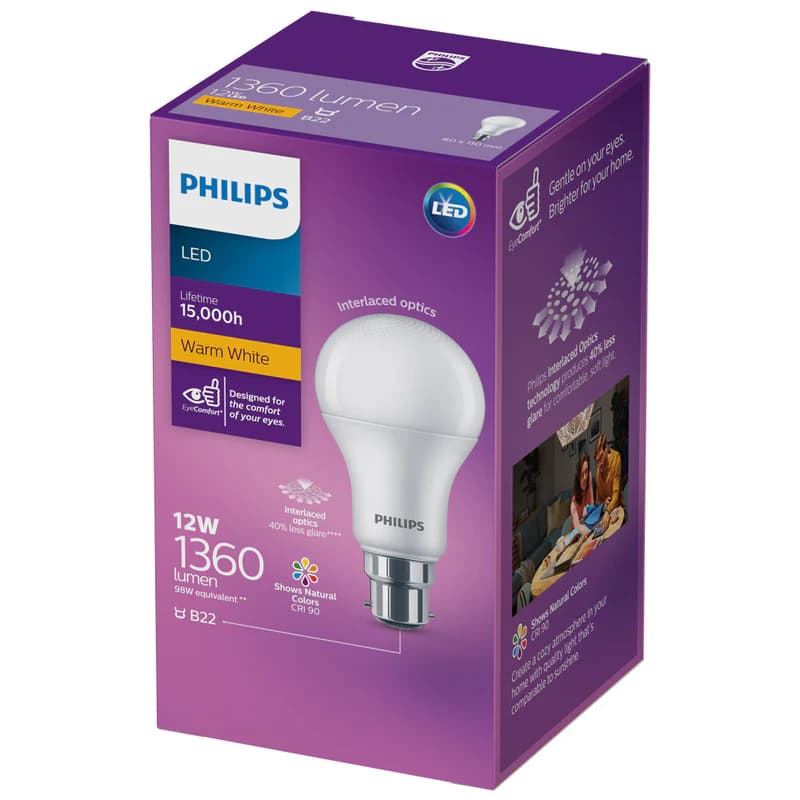
A close up of light bulb packaging showing the CRI rating and lumen output on the label
Check the Socket Before You Buy
This is the practical step that a lot of people skip and then have to go back to the shop for. Not all bulbs fit all sockets, and the two most common types you'll come across in Brunei homes are the E27 and the E14.
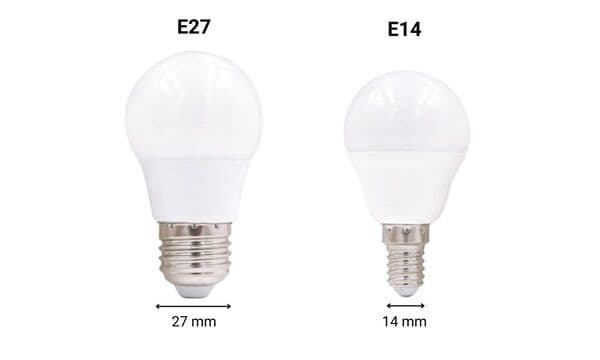
E27 is the large screw fitting, the most common type found in ceiling lights and floor lamps
E14 is the smaller screw fitting, often used in decorative fittings, bedside lamps, and smaller fixtures
Before heading out to buy a replacement bulb, take out the old one and check the base. The size is usually printed on it. Getting the wrong fitting means the bulb simply will not go in, so it takes thirty seconds to check and saves you a wasted trip.
Two light bulbs side by side showing the difference between an E27 large screw base and an E14 small screw base
Quick Summary Before You Shop
Check lumens for brightness, not watts
Use 2700K to 3000K for cosy rooms and cooler tones for task areas
Always choose LED from a reliable brand like Philips or Osram
Look for CRI 80 or above, or 90 if colour accuracy matters to you
Check whether your socket is E27 or E14 before buying
Good lighting is one of those things you notice most when it's wrong. Get it right and it quietly makes every room in your home feel better without you even having to think about it.
Looking to Rent or Buy in Brunei?
We at RentNowBrunei connect you directly with property owners, no middlemen, no hidden fees, no funny business. Browse verified listings and find your next home with confidence.