Japanese Home Secrets for a Home That's Always Tidy
26 January 2026 • RentNowBrunei
There's something about a well-kept Japanese home that just feels different. It's not about having expensive furniture or a huge space. It's about the mindset. The Japanese have been practicing the art of intentional living for centuries, and the results speak for themselves. Whether you're renting a small studio or a spacious house, these habits can make a real difference in how your home feels day to day.
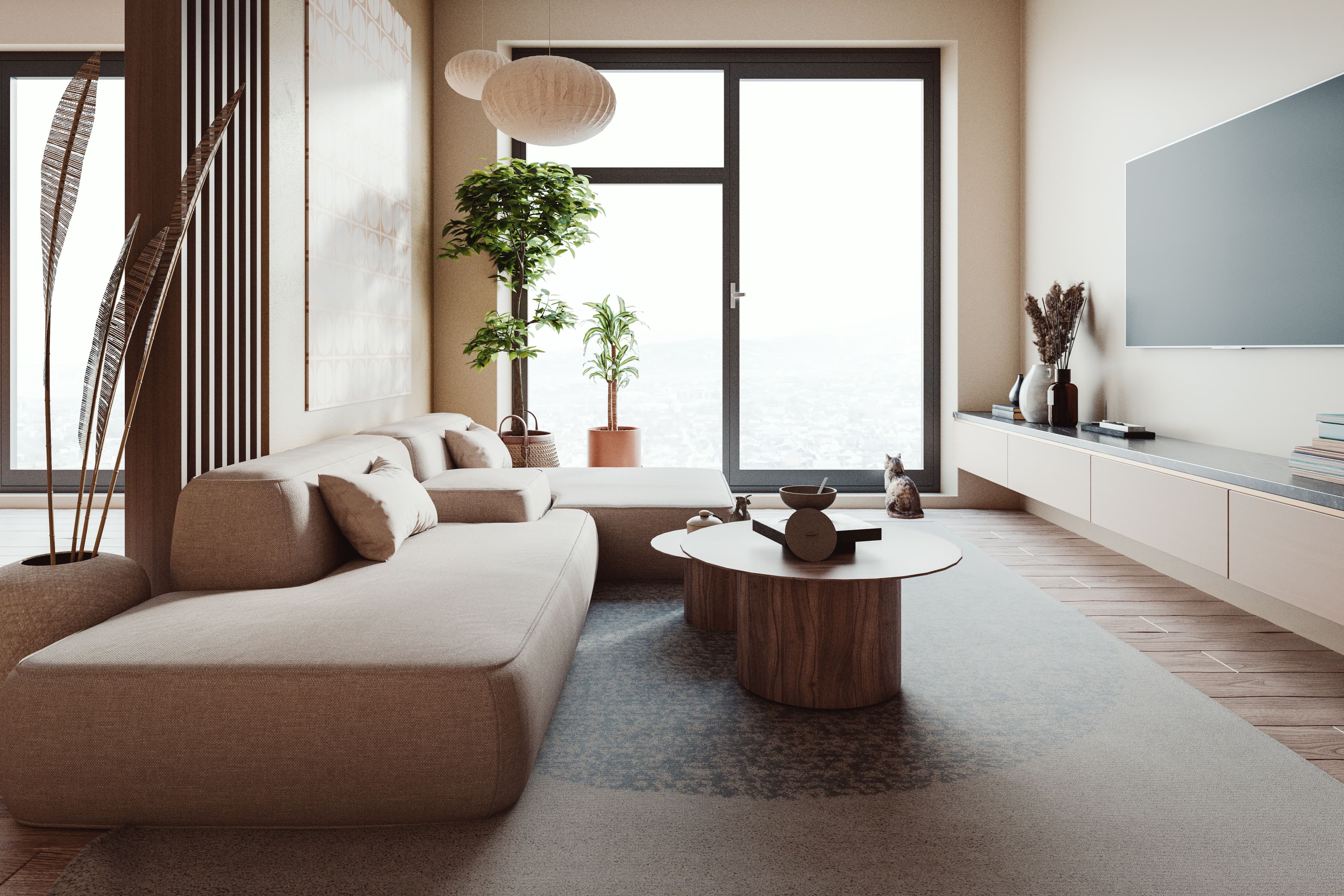
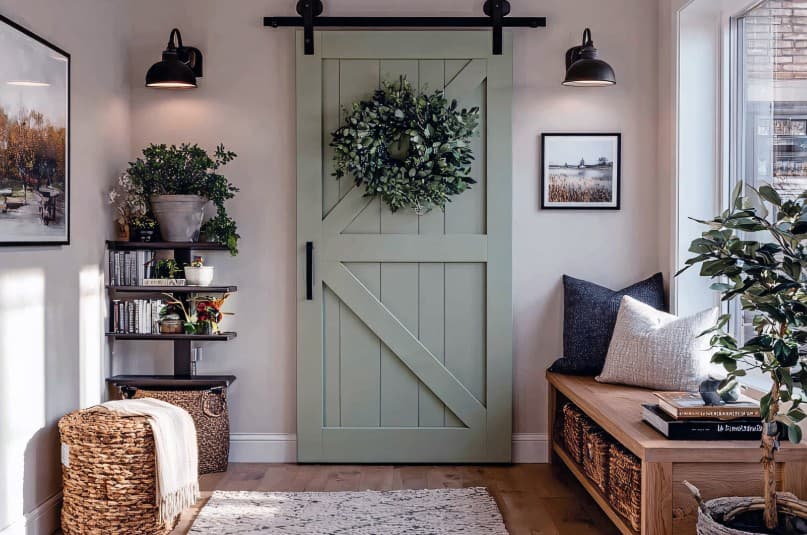
A clean and minimal Japanese-style living room with very little clutter
1. Keep Only What Sparks Joy
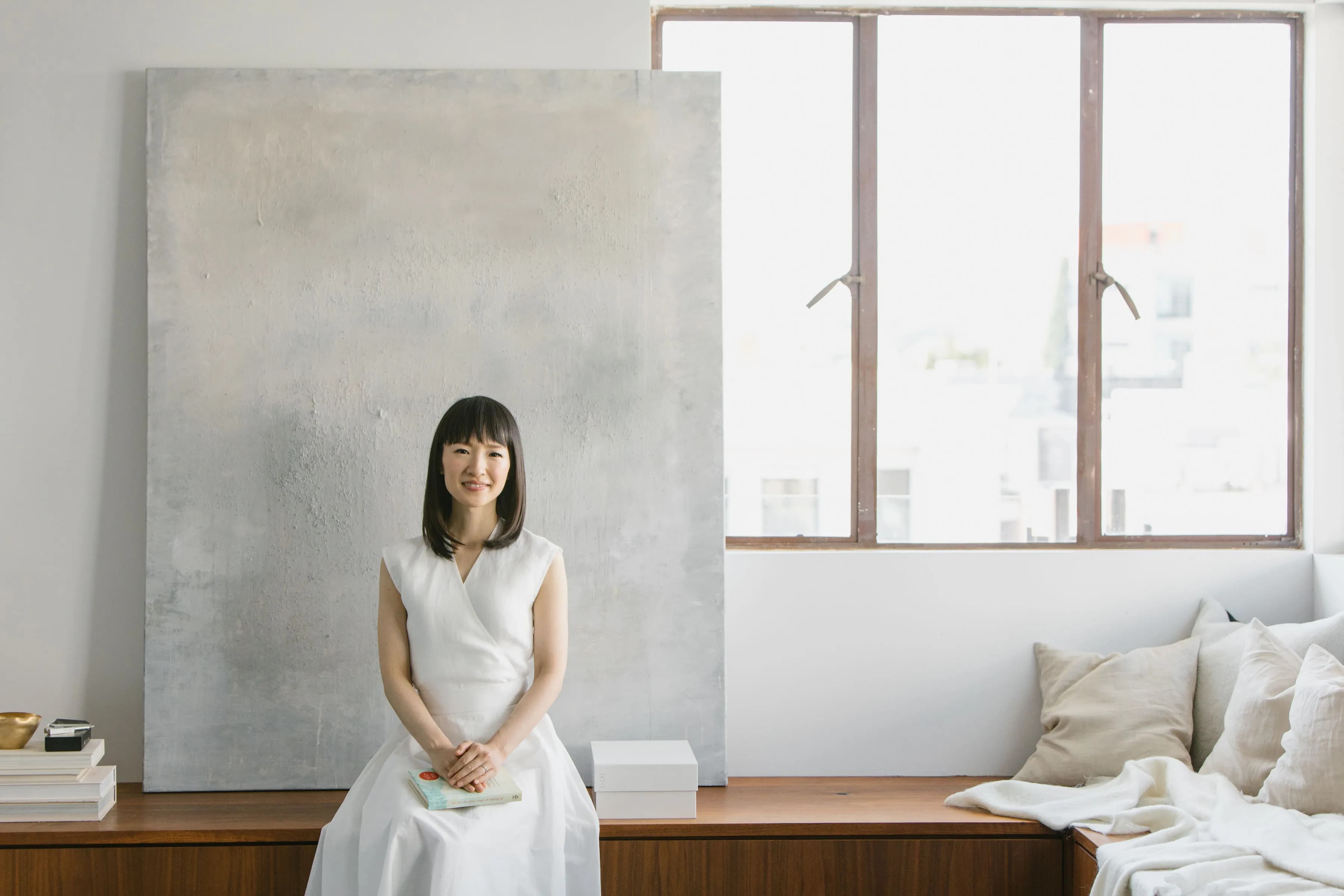
This is the foundation of the KonMari method, popularised by Japanese organising consultant Marie Kondo. The idea is simple: pick up each item you own and ask yourself honestly whether it brings you genuine happiness. Not whether it might be useful someday, or whether you feel guilty getting rid of it. Just whether it truly brings you joy right now.
If the answer is no, the method encourages you to thank the item for its service and let it go. It sounds a little unusual at first, but the gratitude part actually makes it easier to release things you've been holding onto out of guilt or habit. What's left after this process is a home filled only with things you actually love.
This isn't about throwing everything away. It's about being honest with yourself about what actually belongs in your life and your space.
2. Declutter by Category, Not by Room
Most people tidy room by room, but the Japanese approach flips that completely. Instead of cleaning your bedroom, then your living room, then your kitchen, you gather every single item from the same category and deal with them all at once.
For example, collect every piece of clothing in the house, from every wardrobe, drawer, and forgotten corner, and put them all in one pile. Then sort through the whole lot together. This works because you get a clear, honest picture of just how much you own. It's a lot harder to justify keeping ten almost-identical t-shirts when they're all in front of you at the same time.
Start with clothes, as they tend to be the easiest category to make decisions about
Move on to books, then papers and documents
Tackle miscellaneous items like kitchen tools and stationery next
Leave sentimental items like photos and gifts for last, when your decision-making is sharper
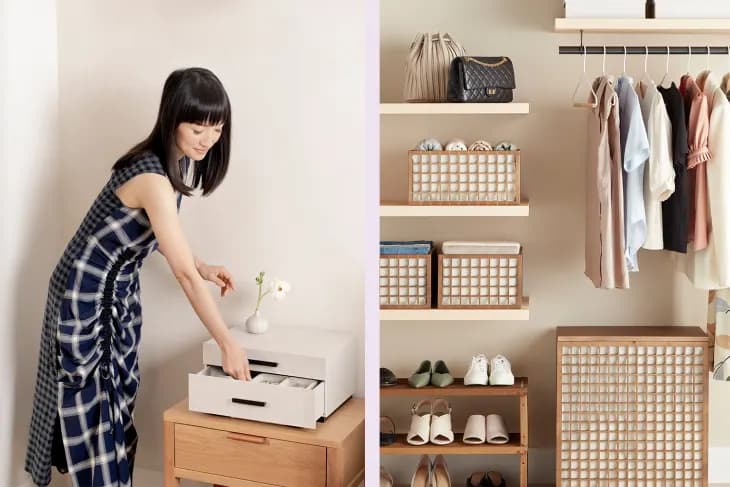
Clothes, shoes and accessories sorted through by category
3. Give Every Item Its Own Home
Once you've finished decluttering, the next step is to decide where every remaining item lives. Not approximately, but specifically. Your scissors don't just go in the kitchen drawer. They go in the second section of the third drawer, next to the tape.
When everything has a fixed place, putting things back becomes automatic. You don't have to think about where something goes, you just return it. This is what makes Japanese homes feel consistently tidy rather than just tidy after a big clean-up. The system maintains itself because it's built on clear habits rather than effort.
4. Fold Clothes Vertically for Instant Visibility
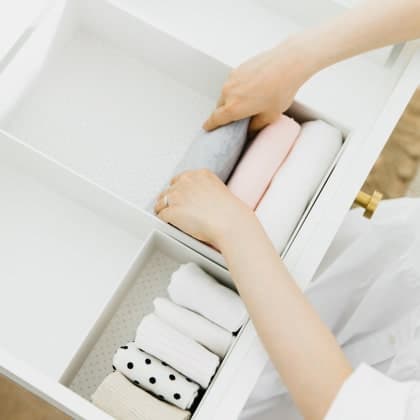
This one sounds like a small detail, but it genuinely changes how you use your wardrobe. Instead of stacking clothes on top of each other in a drawer, fold them so they stand upright and you can see every item at a glance, like files in a filing cabinet.
The benefit is twofold. First, you can actually see everything you own, so nothing gets forgotten at the bottom of a pile. Second, removing one item doesn't disturb the rest of the drawer. It saves space, keeps things visible, and makes getting dressed in the morning a lot less chaotic.
A neatly organised drawer with clothes folded vertically so each item is visible
5. Respect Your Possessions
In Japanese culture, there's a deep respect for the objects that serve you. You care for your things properly, store them well, and treat them with intention. This isn't about being overly precious with your belongings. It's about recognising that how you treat your things reflects how you feel about your space.
When you genuinely value what you own, you're naturally more inclined to put things back where they belong, handle them with care, and notice when something is out of place. A cluttered home often starts not with too many things, but with a habit of treating things carelessly. Shift the habit, and the tidiness tends to follow.
You don't need to own less to have a tidy home. You need to be more intentional about what you own and how you care for it.
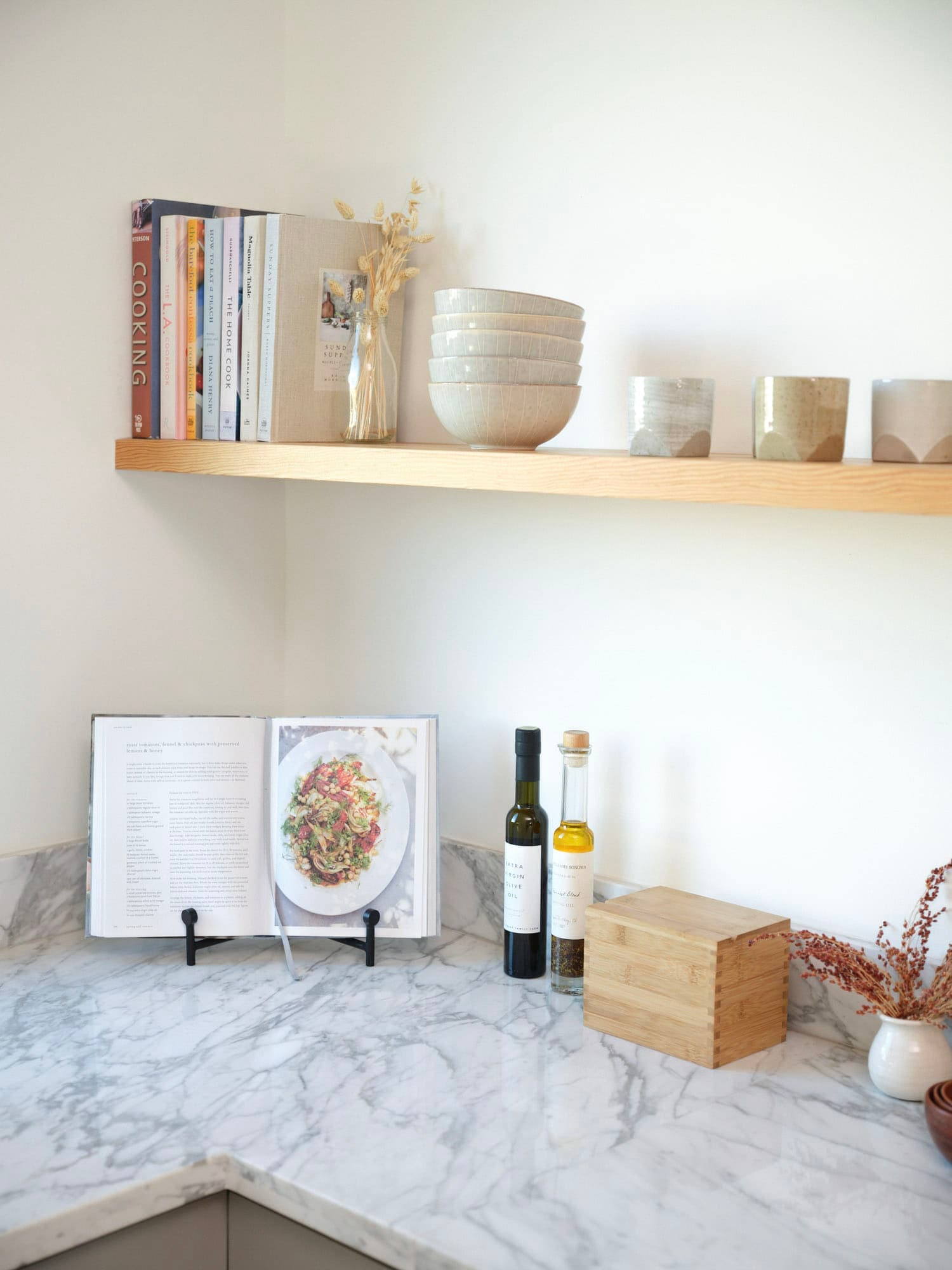
A simple and well-organised shelf at home with only a few carefully placed items on it
Looking to Rent or Buy in Brunei?
We at RentNowBrunei connect you directly with property owners, no middlemen, no hidden fees, no funny business. Browse verified listings and find your next home with confidence.